

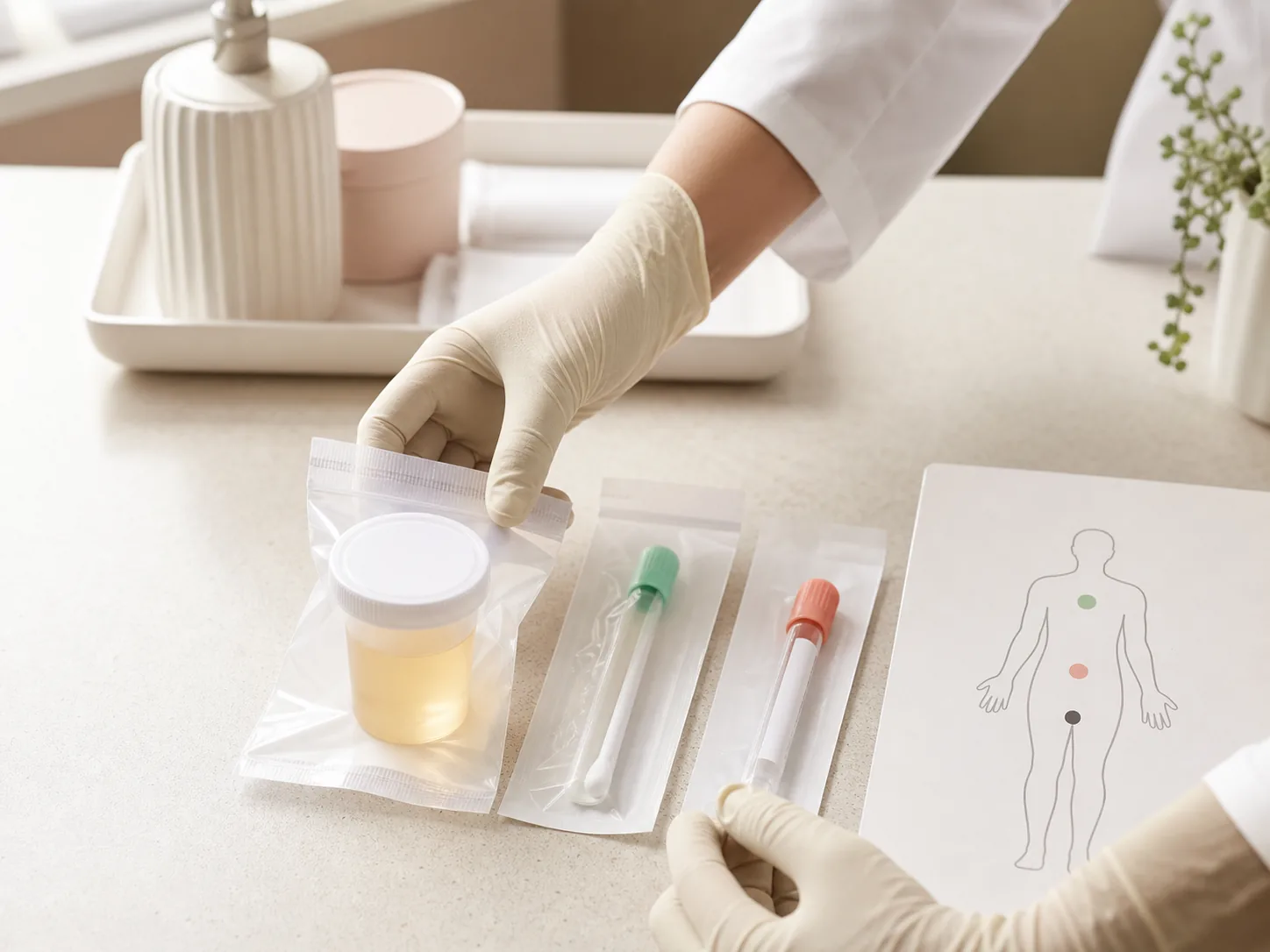
Focus 1
How often should STD testing be considered?
- 01
Discuss your history
A GP or sexual-health clinician should ask about partners, protection, symptoms and the body sites involved.
- 02
Choose the right samples
Screening may use blood, urine or swabs from the vagina, throat, rectum, cervix or urethra depending on exposure.
- 03
Agree on timing
Some people need annual or more frequent screening; after a recent exposure, testing too early may need to be repeated.
- 04
Plan follow-up
Ask how results are delivered, whether partners need care and when repeat testing is recommended.
Source: CDC — Getting tested for STDsCDC — STD screening recommendationsNEPHU — What is Safe Sex? (video)
Focus 2
What should you know about chlamydia, gonorrhoea and herpes?
These infections can be present without obvious symptoms. Diagnosis should come from appropriate clinical testing, and treatment or management should be guided by a qualified clinician.
Chlamydia
Often has no symptoms. Possible signs include unusual vaginal or penile discharge, burning urination, bleeding between periods or after sex, rectal symptoms and lower abdominal or pelvic pain. Testing commonly uses urine or a swab.
Gonorrhoea
Can affect the genitals, rectum or throat and is often symptom-free. It is curable with clinician-prescribed antibiotics, but the exact regimen must follow current guidance because resistance patterns change.
Herpes simplex
HSV-1 often causes oral cold sores but can also cause genital herpes. HSV-2 most often affects the genital region. Either type may be transmitted without visible sores; antiviral treatment can manage outbreaks and reduce transmission risk.
Source: CDC — About chlamydiaCDC — About gonorrhoeaCDC — About genital herpes