Practical questions
Contraception does not replace STI protection
Preventing pregnancy and preventing sexually transmitted infections are different jobs. A contraceptive method can be effective for pregnancy prevention while providing no STI barrier. When choosing or changing contraception, keep infection protection as a separate conversation rather than assuming one prescription or procedure covers both.
General information for adults. Not a substitute for medical assessment.
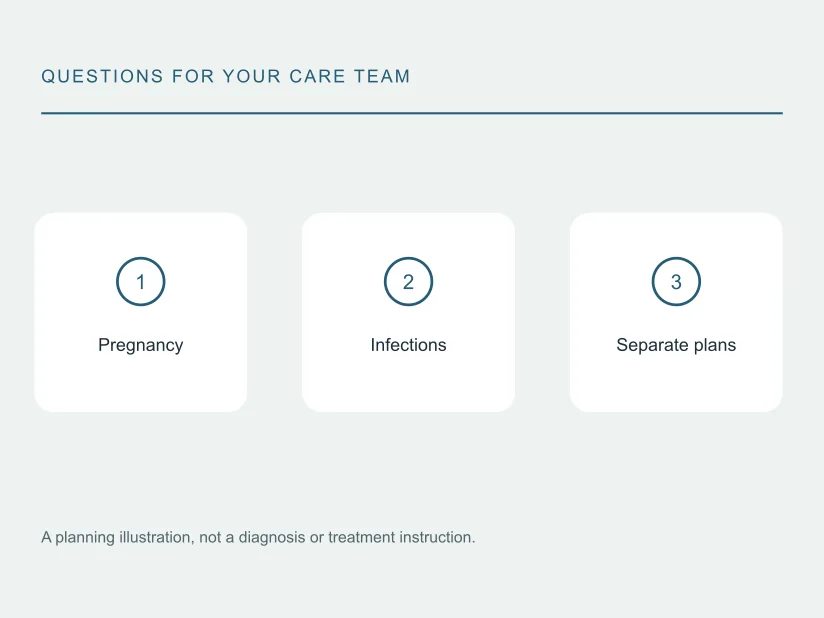
Name the purpose of each method
Methods such as contraceptive pills, implants, intrauterine devices and sterilisation do not act as STI barriers. Condoms can add infection-risk reduction when used correctly and consistently, though they do not cover every exposed skin area. Ask what your chosen method does, what it does not do and whether an additional prevention layer is appropriate for the activities and anatomical sites involved.
Source: CDC: contraception and birth-control methods · CDC: condoms and HIV prevention
Do not replace a prevention plan with assumptions
A stable relationship, contraception use or absence of symptoms cannot establish either partner’s infection status. Discuss testing scope, timing and any ongoing exposures without demanding proof of trust. A partner can want barriers even when pregnancy is not possible or another method is in place. Changes should be agreed voluntarily, not treated as a reward for starting contraception or a reason to ignore symptoms.
Source: CDC: contraception and birth-control methods · CDC: condoms and HIV prevention
Ask separate questions after a problem
If a barrier breaks or an exposure occurs, ask promptly about both pregnancy risk and infection prevention. Emergency contraception does not treat an STI or replace an HIV post-exposure assessment. The appropriate actions depend on the event, timing and existing methods; this guide provides no medicine regimen or confirmation of local availability. Do not wait for symptoms or for a routine online appointment to address a time-sensitive exposure.
Common questions
Does an IUD prevent STIs?
No. It is a pregnancy-prevention method; infection protection needs its own plan.
Can barriers still matter after sterilisation?
Yes. Pregnancy prevention does not remove the possibility of acquiring or transmitting an STI.
Does emergency contraception cover infection exposure?
No. Ask promptly about the separate infection and pregnancy questions after the event.
Sources and information limits
Sources support general medical principles, not the UAE booking policies or service availability. Confirm instructions and local arrangements with the care provider. The update date does not claim clinician review.
Content policy and review statusQuestions before arranging an appointment?
Enquire about the next steps and availability. An enquiry does not confirm a booking or diagnosis and is not an emergency service.