Practical questions
Washing or douching after sex does not prevent STIs
Washing, urinating or douching after sex does not turn an STI exposure into a protected encounter. Internal cleansing cannot wash an infection out, and douching can upset the vaginal environment. Gentle hygiene and infection prevention have different purposes; stronger soap, antiseptic or repeated rinsing is not stronger protection.
General information for adults. Not a substitute for medical assessment.
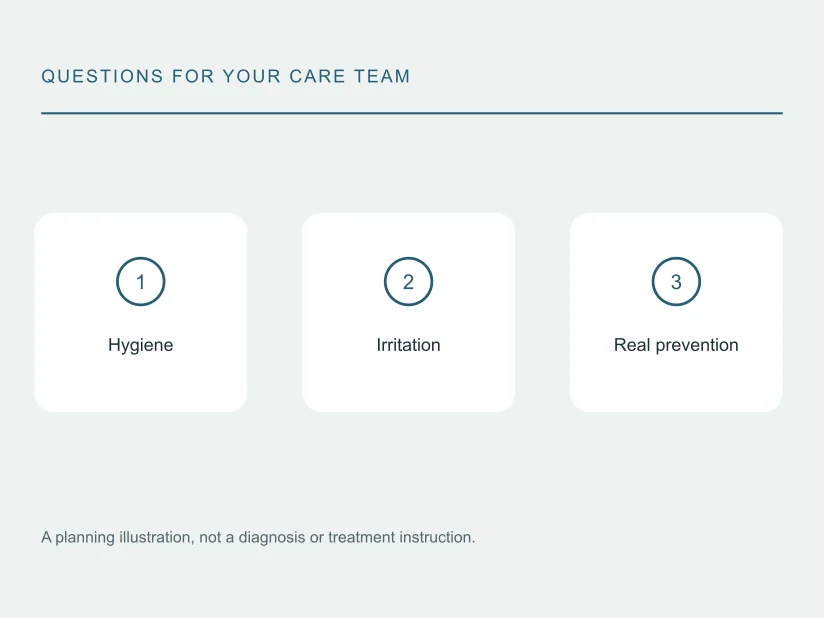
Do not mistake a ritual for prevention
Douching means washing inside the vagina, not ordinary external cleaning. Public-health guidance advises against using it to prevent pregnancy or STIs. Rinsing after an encounter does not replace a barrier that should have been used during contact, and a fresh or clean feeling cannot establish a negative infection status. Urinary-comfort advice for recurrent UTIs also should not be reinterpreted as proof that urinating prevents STI transmission.
Avoid creating a second problem
Do not place disinfectants, bleach, fragranced products or improvised mixtures inside genital areas after an exposure. Irritation, burning or a changed discharge can then add to the original concern and make self-diagnosis more confusing. Tell the clinician exactly what was used if symptoms develop. Seek urgent care for severe pain, chemical injury or rapidly worsening symptoms rather than repeatedly washing in an attempt to remove the problem.
Act on the actual exposure
If protection failed or was not used, describe the act, body sites and timing to a qualified professional. Pregnancy prevention, HIV post-exposure assessment and STI testing are separate questions, some time-sensitive. Do not wait to see whether cleansing causes a symptom or assume that no discharge means no infection. Agree a prevention and follow-up plan based on the event; this guide gives no cleansing protocol or personal medicine recommendation.
Common questions
Can internal washing prevent pregnancy or an STI?
No. Douching is not a preventive substitute for contraception, barriers or appropriate post-exposure care.
Does urinating make an unprotected encounter STI-safe?
No. Urinary-health advice does not establish prevention of sexually transmitted infections.
Should I hide an antiseptic used internally?
No. Accurate product information helps a clinician assess irritation or chemical injury safely.
Sources and information limits
Sources support general medical principles, not the UAE booking policies or service availability. Confirm instructions and local arrangements with the care provider. The update date does not claim clinician review.
Content policy and review statusQuestions before arranging an appointment?
Enquire about the next steps and availability. An enquiry does not confirm a booking or diagnosis and is not an emergency service.