Practical questions
Before stopping barriers: discuss tests and exclusivity
Trust and a testing plan serve different purposes. Before deciding to stop using barriers with a partner, discuss what each person understands by exclusivity and what testing has actually covered. A negative result is useful information, but it does not certify every infection, every body site or future exposures.
General information for adults. Not a substitute for medical assessment.
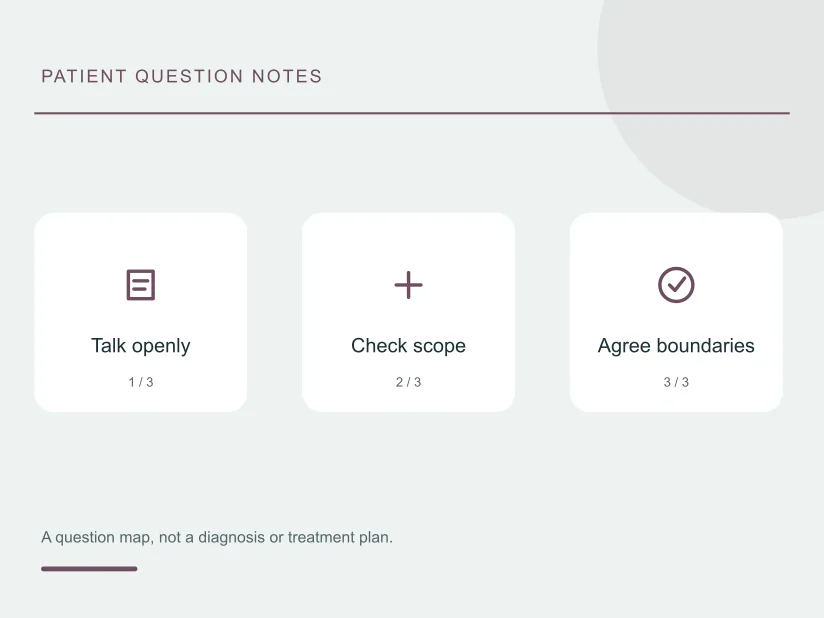
Use concrete, neutral questions
Ask when testing happened, what infections were included and whether there has been any possible exposure since. Share your own information too. Avoid asking someone to prove that they are “clean”; an infection is a health issue, not a statement about character, honesty or personal worth.
Source: CDC: About gonorrhea
Account for timing and specimen sites
A test performed too early may need follow-up, and some exposures require samples from a throat or rectum rather than urine alone. A clinician can help both people understand an appropriate testing plan. Comparing package names is less useful than knowing what was tested and whether the timing fits the exposure.
Make the agreement explicit and revisitable
Discuss which contacts the agreement covers and what happens if circumstances change or a barrier fails. Mutual monogamy with a tested, uninfected partner can reduce STI risk, but it depends on the actual agreement and infection status, not a relationship label. Either person can choose to continue barriers or pause contact.
Source: CDC: About gonorrhea
Keep prevention broader than a test
Discuss vaccination and pregnancy prevention separately where relevant. A negative STI test is not contraception, and contraception does not usually protect against STIs. If a partner reports symptoms or a diagnosis later, seek advice without assuming betrayal; some infections can remain unnoticed for a long time. Avoid using a result to pressure someone into sex.
Common questions
Does testing together make sex risk-free?
No. Timing, test scope, exposure sites and later contact still matter. Discuss the remaining limitations.
Is exclusivity a substitute for finding out HIV status?
No. Partners should understand their status and testing needs rather than relying on a relationship label alone.
Must I agree to stop condoms after a negative test?
No. Consent and prevention preferences remain yours; a test result does not create an obligation.
Sources and information limits
Sources support general medical principles, not the UAE booking policies or service availability. Confirm instructions and local arrangements with the care provider. The update date does not claim clinician review.
Content policy and review statusQuestions before arranging an appointment?
Enquire about the next steps and availability. An enquiry does not confirm a booking or diagnosis and is not an emergency service.